How to Start a Small Food Garden in Your Backyard (Without Wasting Your First Season)
Most first gardens fail the same way. Someone gets excited, buys twenty kinds of seed, digs a big patch in a weekend, and by midsummer it’s overgrown, half the plants are sulking in shade, and the whole thing feels like a chore. The fix is not more effort. It’s starting smaller and checking three things before you buy anything: sun, soil and water.
This is how to start a small food garden in your backyard, and it works whether you have a yard, a terrace or a few sunny containers.
Start with your space
How much sun do vegetables need?
Fruiting vegetables such as tomatoes, peppers, brinjal (eggplant) and squash generally want 6 to 8 hours of direct sun. Leafy greens and radishes manage with less.
Don’t guess. On a clear day, look at your space at around 9 a.m., 1 p.m. and 5 p.m. and note which spots are lit. Pay attention to shadows from walls, fences and trees, which often hit the afternoon sun hardest. Whatever spot gets the most light is where your first bed goes, even if it isn’t the prettiest corner.
How to test soil at home with a squeeze
You don’t need a lab test to start. To test soil at home, take a handful of slightly damp soil and squeeze it:
- Falls apart at once: sandy. It drains fast and holds few nutrients.
- Stays in a sticky, hard lump: clay. It holds water but roots struggle in it.
- Holds together, then crumbles when you poke it: loam. This is what you want.
Whichever you have, the usual fix is the same: mix in well-rotted compost or aged manure. It helps sandy soil hold water and loosens clay. If you’re curious about pH or nutrients, a basic soil test kit or a local agricultural extension office can do it cheaply, but it isn’t a reason to delay.
Think about water
Where’s your tap or water source, and how far is it from the bed? A bed that is a pain to water gets watered less. Put the garden near the hose or watering can route.
Choose crops that earn their space
Pick things your household will actually eat, and start with just a handful:
- Leafy greens (lettuce, spinach, chard, kale): quick, tolerant of part shade, and you can cut the outer leaves while the plant keeps growing.
- Radishes: often ready in 3 to 4 weeks, which is a good morale boost for beginners.
- Cherry or bush tomatoes: compact varieties are easier than tall vines that need heavy staking.
- Herbs (basil, mint, coriander, chives): a small pot can supply the kitchen for weeks.
- Beans or zucchini: the more you pick, the more they produce.
Timing depends on where you live. In many warm regions, including much of India, the cooler months suit leafy greens, radish, carrots and tomatoes better than peak summer. Check your local sowing calendar or ask a nearby nursery what’s planted this month. Our list of winter vegetables to grow in pots shows what to sow now in India.
Raised bed or in-ground: which is better for beginners?
In the ground costs the least. If your soil is reasonably loose, clear the grass or weeds, dig in compost and plant.
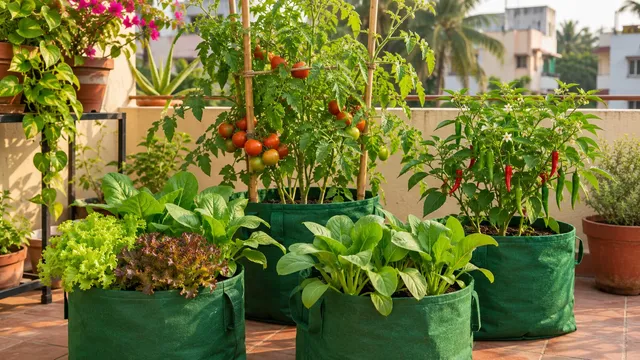
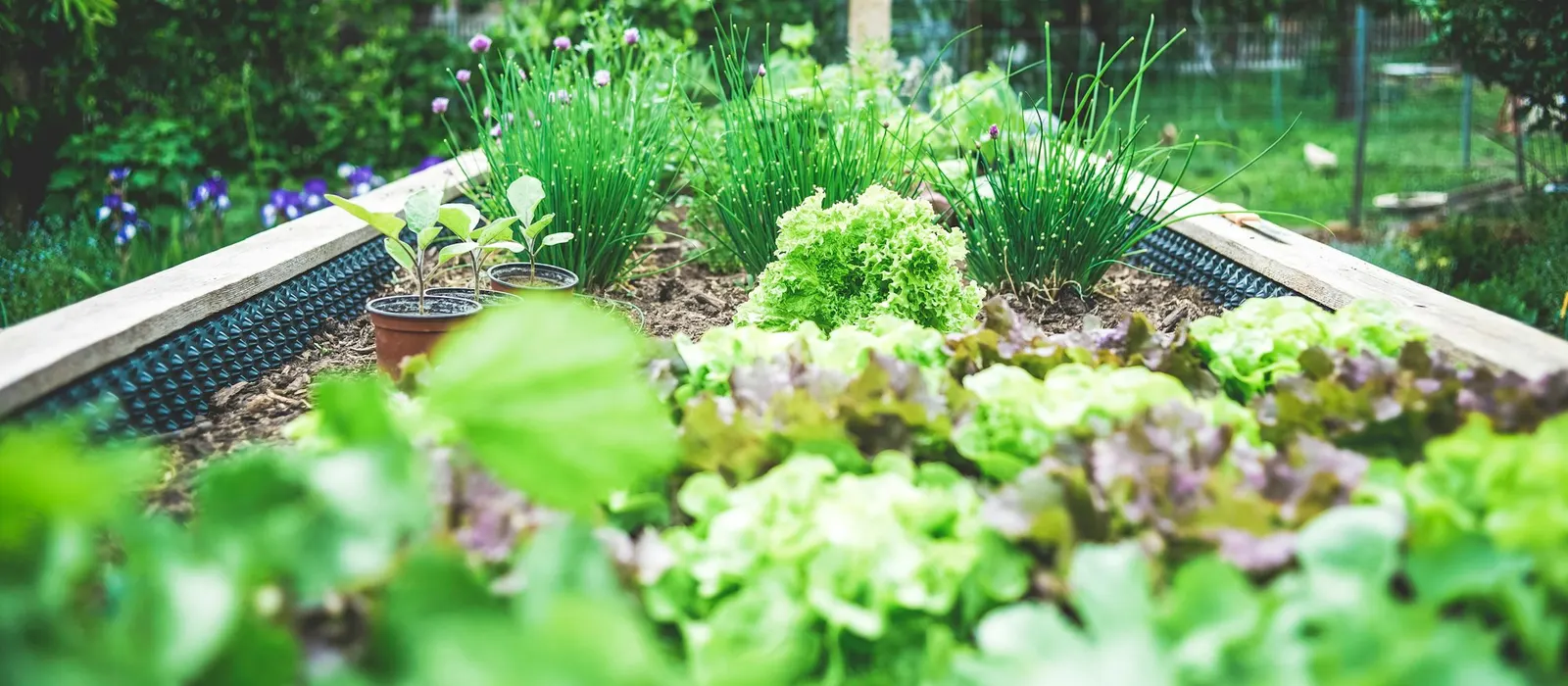
Raised beds are worth it if your soil is rocky, very heavy or contaminated, or if bending is hard on your back. They drain better, warm up sooner and you never trample the planting area. Keep them about 3 to 4 feet wide so you can reach the middle from either side. Untreated wood, brick or stone all work. Containers are the same idea in miniature: use a decent potting mix, make sure there are drainage holes, and give each plant a pot big enough for its roots. For a balcony or terrace, see our balcony garden starter guide and the guide to grow bags for a terrace garden.
Keep it going
- Water deeply, not daily. A thorough soak a couple of times a week usually beats a daily sprinkle, because roots then grow down. In hot or windy weather, or in pots, you’ll need more. Push a finger into the soil: if it’s dry an inch or two down, water.
- Mulch. A 2 to 3 inch layer of straw, dry leaves or untreated grass clippings cuts weeds and slows evaporation.
- Pick often. Regular picking of beans, zucchini and greens tells the plant to keep producing.
- Look at it every day. Five minutes is enough to spot a pest or a wilting plant early. If even five minutes is hard to find, the 80/20 rule at work shows how to see which tasks deserve your week.
If you want a full guide
Some people like having a single book or course to follow through the season.
Two products in this space are:
- Medicinal Garden Kit — a seed kit for growing medicinal herbs at home
- The Self-Sufficient Backyard — a printed book on growing food at home
Both are sold through Digistore24. We haven’t reviewed either product. We don’t know their prices, contents or refund terms, so check those on the seller’s page before buying. Be cautious about anything that sells itself through fear. A good gardening guide should leave you with practical skills, not panic. Free information from local gardening groups, your agricultural extension service and library books covers the basics just as well.
Common questions
How much sun do I really need?
For fruiting crops like tomatoes and peppers, 6 to 8 hours of direct sun. With 3 to 4 hours you can still grow leafy greens and radishes.
Are raised beds better for beginners?
Usually easier, because you control the soil and drainage. But they cost more to build. If your ground soil is decent, planting directly saves money.
How often should I water a vegetable garden?
It depends on soil, weather and whether you’re using pots. Newly planted seedlings need the soil kept steadily moist. Established plants do better with deeper, less frequent watering. Check the soil with your finger rather than following a fixed schedule. More home ideas are collected under Home and garden.
More in Home and garden
- Home and garden
What Size Grow Bag Do Tomatoes, Peppers and Lettuce Need?
Choose a grow bag for a patio vegetable garden using US gallons, sunlight and potting mix volume. Includes a worked shopping list for two peppers.
- Home and garden
How Much Soil Does a 4 × 8 Raised Bed Need?
Work out how many cubic feet, cubic yards or bags to buy for a 4 × 8 raised bed. Compare three fill depths and account for soil you already have.
- Home and garden
How to Make Compost at Home in India (Even in a Flat): The Simple Bucket Method
Turn kitchen waste into compost in a flat: the wet-to-dry mix, a simple bucket method, fixes for smell and flies, and when it's ready to use.