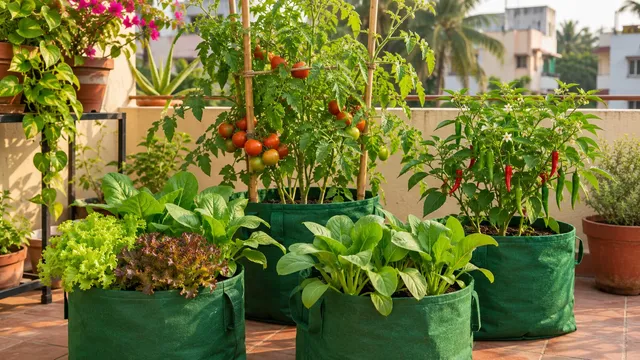
Best Grow Bags for a Terrace Garden in India: Size, Material and What to Buy
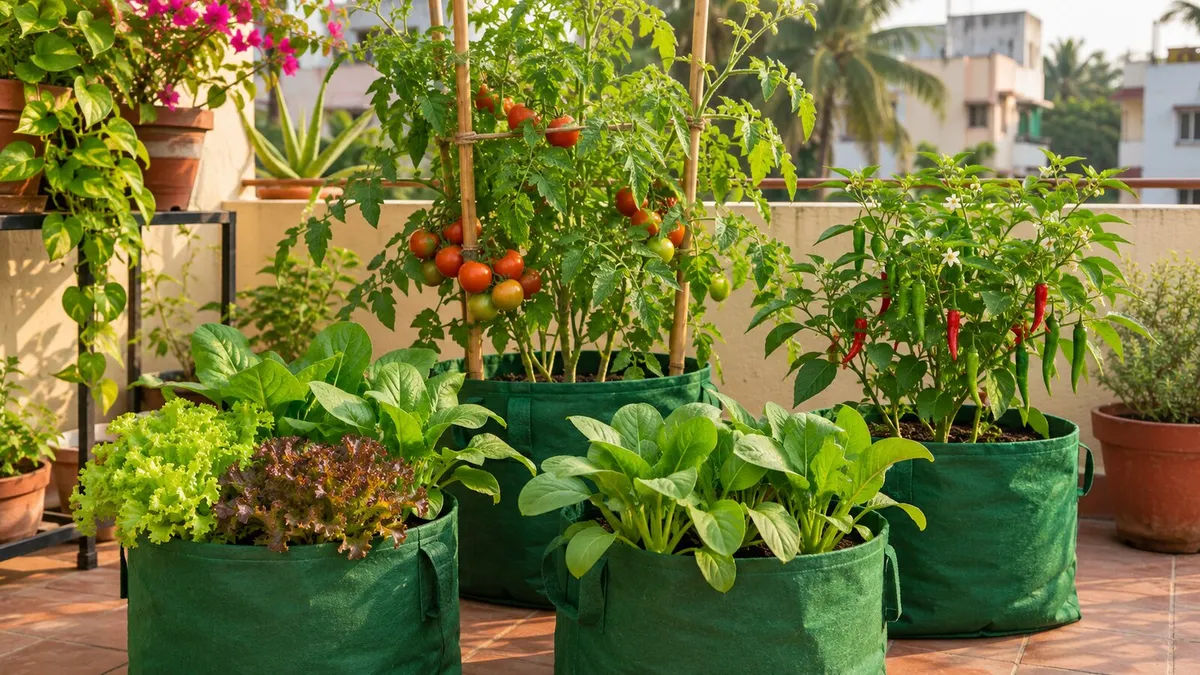
A grow bag is easy to move when empty; once it is full of wet mix, it is a different story. Pick one for the plant you want to grow and the conditions on your terrace, not just because a pack looks like a bargain. This guide covers materials, sizing and listing checks. We have not tested the products in a garden.
Which grow bag material is best for an Indian terrace: HDPE or fabric?
There is no universal winner here. Woven HDPE usually holds its shape and often has handles; fabric bags let air and water move through the sides. On a sun-baked terrace, though, construction and UV protection matter as much as the material name. Treat a specific lifespan as a seller claim, not a promise.
| Feature | Woven HDPE | Fabric / non-woven |
|---|---|---|
| Water movement | Drains through base holes or eyelets | Water and air can pass through the sides |
| Drying | May retain moisture longer, depending on mix and weather | Can dry quickly in wind and direct sun |
| Moving | Handles are useful; inspect stitching | Usually light when empty; wet soil is heavy in either type |
| Check before buying | UV treatment, GSM, seams and drainage | Fabric type, seams, drainage and stated outdoor suitability |
| May suit | Gardeners wanting a structured bag | Gardeners prioritising airflow and easy storage |
Whatever you choose, monitor soil moisture. Container plants can need frequent watering in hot weather; UMN Extension notes that some may need water more than once a day depending on container size and temperature (container watering guidance). If you cannot check daily, see whether self-watering pots suit your plants and what their limits are.
What size grow bag do you need?
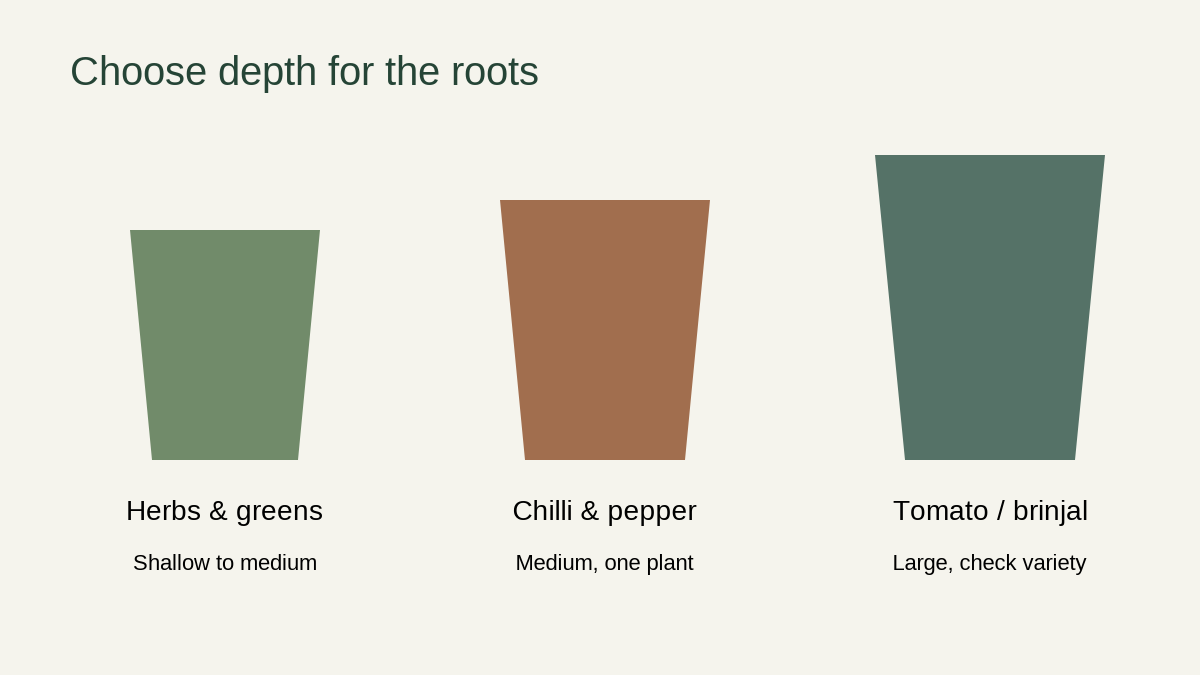
Size the container for the plant it will hold at maturity. Penn State Extension gives a useful baseline: at least 20 inches wide for one tomato, and 14 inches for a pepper or eggplant (container vegetable guidance). These are general container recommendations from a US source; check the variety label and local growing advice too.
| Crop | Starting point | Before planting |
|---|---|---|
| Coriander and small herbs | Shallow or medium bag; allow room to sow in a row | Check seed packet spacing; coriander dislikes crowding |
| Leafy greens | Wide, shallow-to-medium bag | Choose width for the number of plants |
| Chilli / pepper | One roomy bag for the mature plant | Use the plant label to check mature size |
| Tomato or brinjal | Large, deep bag; start with at least a 20-inch-wide container for tomato | Support the plant and confirm variety requirements |
| Root vegetables | Depth depends on the crop and variety | Check the packet; stones and compact mix can deform roots |
Do not assume that a bag with a large litre claim is deep enough. Check actual dimensions and whether those refer to the flat bag or filled size.
What to check before you buy
- Dimensions when filled: compare width and depth with your crop plan.
- Drainage: look for open drainage holes or porous fabric. Standing water can harm roots.
- UV claim: for an exposed terrace, prefer an explicit outdoor or UV stabilisation specification; ask the seller if it is missing.
- Construction: inspect seam photos, handle attachment and edge finishing.
- Pack count: confirm whether the listing is for one bag or a set.
- Material description: woven HDPE and non-woven fabric are different constructions; avoid listings that use the terms interchangeably without explaining.
- Recent buyer feedback: look for specific reports about size accuracy, stitching and outdoor wear, not just a star average.
Choose a first grow bag by crop
For herbs or leafy greens, start with a wide, shallow-to-medium container and use the seed packet spacing. Fruiting plants need a larger, deeper bag: Penn State Extension suggests at least 20 inches wide for one tomato. Check filled dimensions, drainage and material details before choosing a listing. No specific Amazon listing has been verified for this guide, so it does not make a product recommendation yet.
How many bags does a small terrace need?
Start with a few rather than filling the roof at once. A practical first layout is one large fruiting-plant container, one or two medium containers for greens, and a small pot for herbs. Observe how quickly each dries and how much sun it receives before expanding. Leave a clear path and keep drains accessible.
A few large bags of wet mix add up to a lot of weight. Before filling them, check where runoff will go and whether the terrace can take the load. If you use trays, empty them so roots are not left standing in water.
What should you put in a grow bag?
Use a loose potting medium suited to the plant, with enough structure to hold moisture while draining freely. Avoid packing ordinary garden soil tightly into a container. Follow seed or nursery directions for crop-specific needs. Our backyard food garden guide covers sunlight and crop planning, and the balcony garden starter guide helps with a first-space checklist.
Common grow bag mistakes
- Choosing by pack size without checking each bag’s dimensions.
- Putting a thirsty plant in a small bag on a windy, exposed roof.
- Blocking drainage holes with a tray full of standing water.
- Leaving bags on a surface where runoff can seep into a room below.
- Believing a lifespan claim without checking UV treatment and construction details.
For cool-season crops like radish, carrot and peas, see which winter vegetables to grow in pots and how deep each pot should be.
Frequently asked questions
Which is better for a terrace, HDPE or fabric grow bags?
HDPE may retain moisture longer and hold its shape; fabric allows air and water through the sides and may dry faster. Compare outdoor suitability, drainage and construction for your conditions.
What size grow bag is right for tomatoes?
Use a large, deep container and check the variety’s requirements. Penn State Extension’s general starting guidance is at least 20 inches wide for one tomato plant; that is a reference, not a universal rule.
What size should I use for chilli or coriander?
Coriander can grow in a shallower, wider container. A mature chilli plant needs more root room. Use the seed packet or nursery label for spacing and mature size.
How long do grow bags last in Indian sun?
There is no dependable universal lifespan. Material, UV stabilisation, thickness, exposure and handling all affect wear; sellers’ ranges differ. Check the warranty and recent reviews.
Do grow bags need drainage holes?
They need a way for excess water to escape. Woven bags generally use holes or eyelets; porous fabric drains through its sides. Do not let a tray keep the roots waterlogged.
Can I use grow bags on a rented terrace?
Usually the gardening choice is yours, but first check the rental agreement, water runoff, floor protection and terrace load limits with the property owner or manager.
Where to go next
Explore balcony garden essentials, read the backyard food garden beginner guide, or browse Home and garden.
More in Home and garden
- Home and garden
What Size Grow Bag Do Tomatoes, Peppers and Lettuce Need?
Choose a grow bag for a patio vegetable garden using US gallons, sunlight and potting mix volume. Includes a worked shopping list for two peppers.
- Home and garden
How Much Soil Does a 4 × 8 Raised Bed Need?
Work out how many cubic feet, cubic yards or bags to buy for a 4 × 8 raised bed. Compare three fill depths and account for soil you already have.
- Home and garden
How to Make Compost at Home in India (Even in a Flat): The Simple Bucket Method
Turn kitchen waste into compost in a flat: the wet-to-dry mix, a simple bucket method, fixes for smell and flies, and when it's ready to use.