Balcony Garden for Beginners in India: 5 Things to Buy First (and What to Skip)
A balcony is enough to start a garden. No terrace, no lawn, no green thumb. A few hours of sun, some containers and the habit of glancing at your plants over morning chai will do. Where beginners go wrong is rarely effort. They buy too much, too soon, for a space they have not yet watched.
So this is a short list: five things worth buying first, a few to skip, and a way to pick plants that suit the light you actually have. One thing to say up front. We have not grown with these particular products, so instead of promising results we tell you what to look for on each listing.
Watch the balcony for a day first
Before spending anything, look at the space at 9 a.m., 1 p.m. and 4 p.m. and count the hours of direct sun. A balcony that feels bright can sit in the shadow of the building opposite for half the day. Notice the wind too. Upper floors get strong gusts, and tall light pots topple while wide, low containers stay put. And remember that wet soil is heavy. In a flat, check your society’s rules on railings and ledges before hanging anything.
Then match plants to the light:
| Direct sun on your balcony | What usually works |
|---|---|
| 6 hours or more | Tomatoes, chillies, brinjal, basil, most herbs |
| 3 to 5 hours | Coriander, spinach, lettuce, mint, spring onion |
| Under 3 hours | Money plant, snake plant, ferns and other foliage plants |
Treat these as rules of thumb. Our backyard food garden guide goes deeper on what vegetables need. Season matters as well: in much of India, coriander and leafy greens do best in the cooler months and bolt quickly in summer heat. Starting in November is good timing for them.
1. Grow bags
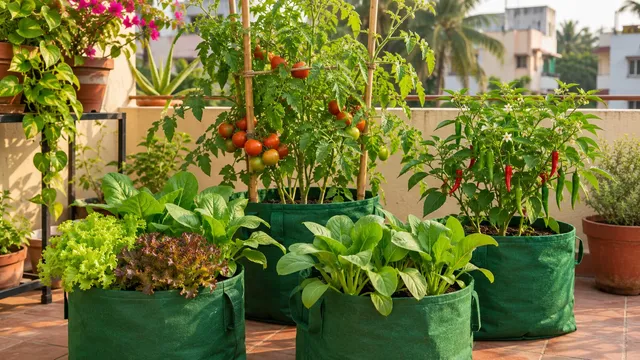
If you buy only one thing, make it grow bags. They are light, they drain through the sides and base, and a set usually costs less than a row of ceramic pots. A bag of soil is far easier to drag across the floor when the sun moves with the seasons. The drainage helps too. New container plants more often die from sitting in wet soil than from thirst, and a bag that drains forgives a heavy hand.
Our example is the UGAOO grow bags, 12x12 inch, set of 6. On the listing, check the stated size and material, whether there are handles, and what recent buyers say about stitching and fading in sun. That size is right for herbs, chillies and greens. A tomato wants something bigger. The trade-off is that bags dry out faster than pots in summer, so in hot spells push a finger into the soil each day rather than watering to a fixed schedule. For sizes by crop and what to check on a listing, read our grow bags buying guide.
2. A tiered stand
A stand stacks pots in levels, so a narrow balcony can hold nine plants instead of three. It also lifts pots off the floor, which stops water pooling against the wall and gets more light to each plant.
We picked the D&V Engineering 3-tier metal planter stand as the example. Measure your balcony width first, then read the listing for dimensions and the weight the stand is rated to hold with wet pots. Look at the photos to see how far apart the tiers are, because a tall plant on the lower tier needs headroom. Metal can rust if it spends every monsoon outside, so keep it under cover where you can and wipe it down when the rains end.
3. One small tool kit
A trowel, a hand fork and pruning scissors cover nearly everything a balcony gardener does: potting up, loosening crusted soil, cutting back dead leaves. Buying them in one pouch is simpler than collecting them one at a time, and gloves mean the first session is not your last.
Here we looked at the Kraft Seeds 7-piece garden tool kit. Sets differ, so check exactly which pieces are included and what they are made of. Zoom in on the photos of the joint between handle and blade, which is where cheap tools tend to give way. Light tools like these are fine for pots and grow bags but will bend if you try to break hard ground.
4. A long-spout watering can
On a crowded balcony, a long narrow spout lets you water the base of a plant tucked behind its neighbours without drenching the leaves, which also cuts the risk of mildew. For new seedlings a small spray bottle is gentler, since a stream of water will wash them out.
The example is the SLB 2 litre watering can. Read the capacity and spout length, and go straight to the newest reviews. Leaks at the spout joint are the usual complaint with plastic cans, and if recent buyers mention it, pick another. Two litres suits a handful of pots. With a dozen you will be refilling constantly.
5. A self-watering hanging planter
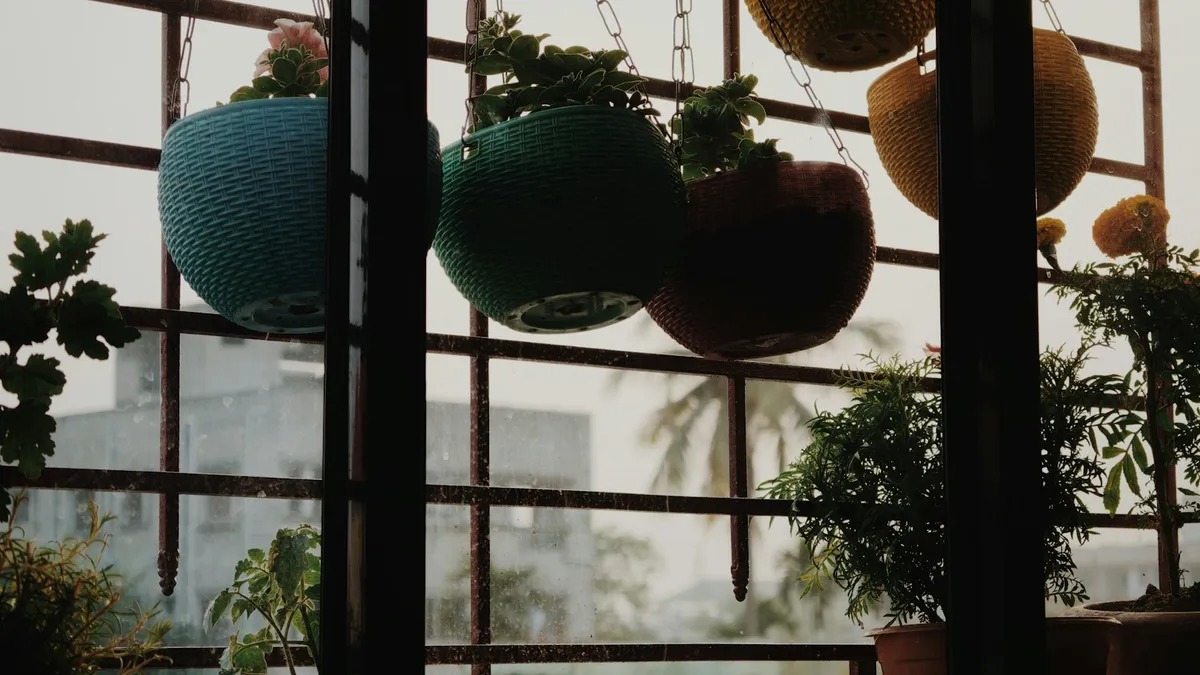
This one is for the days you forget. A reservoir under the soil keeps the plant going through a long weekend or a trip home for a festival, and hanging versions use railing space that would otherwise be wasted.
We chose the Eha EcoSling self-watering hanging planter, 10 inch, set of 4. Rely only on what the listing says about the material, check the reservoir size, and see how the hooks fit your railing. Hanging pots put weight on the railing, so make sure it can take it and that your society allows it. Do not read “self-watering” as “looks after itself”. Plants still need checking, and a reservoir left standing for days can breed mosquitoes, so refill it rather than topping it up forever. Our self-watering pots guide compares wick, reservoir and drip types.
What to skip at the start
- A dozen pots on day one. Begin with three or four. You will learn how fast they dry out and which corner is really sunny.
- Large ornamental planters. Heavy, pricey and a pain to move when the light changes.
- Lots of varieties. Two herbs and one vegetable teach you more than ten half-dead plants.
- Anything that guarantees a harvest. No seed, soil booster or gadget can. If a listing promises one, be wary.
- Reaching for sprays. Yellow leaves and wilting in the first weeks usually come from watering or light, not pests.
Easy plants for a first try
Mint forgives mistakes and copes with part shade. Coriander grows quickly from seed in cool weather and likes morning sun. Spinach and lettuce give fast leaves in a partly sunny spot. Chillies want your brightest corner and reward patience. For a shady balcony, money plant is the usual answer, and it is very hard to kill.
Starting in winter? These winter vegetables grow well in pots and most of them are ready in about six weeks.
Frequently asked questions
Which plants grow best on a balcony in India?
It depends on your sun and the season. Herbs like mint and coriander, leafy greens and chillies all do well in containers. Choose by the hours of light your balcony gets, not by the plant you would like to have.
How much sun does a balcony garden need?
Fruiting plants such as tomatoes and chillies generally want around six hours of direct sun. Leafy greens and most herbs manage on three to five. Watch your balcony for a full day before you buy.
Can I start a balcony garden in a rented flat?
Yes. Use light containers you can carry out when you move, avoid drilling into walls, and follow your building’s rules on railings. Grow bags and a freestanding stand suit this well. Wall-mounted fixtures usually do not.
What is the cheapest way to start?
Grow bags or reused containers with drainage holes, a bag of potting soil and one packet of seeds. Leave the stand, tools and planters until you know you enjoy it.
Where to go next
The Home and garden section has more. If your kitchen herbs are about to take over the counter, our small kitchen organiser guide is a good companion. And if you have a yard or terrace rather than a balcony, start with how to start a small food garden in your backyard.
By the elecv team.
More in Home and garden
- Home and garden
What Size Grow Bag Do Tomatoes, Peppers and Lettuce Need?
Choose a grow bag for a patio vegetable garden using US gallons, sunlight and potting mix volume. Includes a worked shopping list for two peppers.
- Home and garden
How Much Soil Does a 4 × 8 Raised Bed Need?
Work out how many cubic feet, cubic yards or bags to buy for a 4 × 8 raised bed. Compare three fill depths and account for soil you already have.
- Home and garden
How to Make Compost at Home in India (Even in a Flat): The Simple Bucket Method
Turn kitchen waste into compost in a flat: the wet-to-dry mix, a simple bucket method, fixes for smell and flies, and when it's ready to use.