What Size Grow Bag Do Tomatoes, Peppers and Lettuce Need?
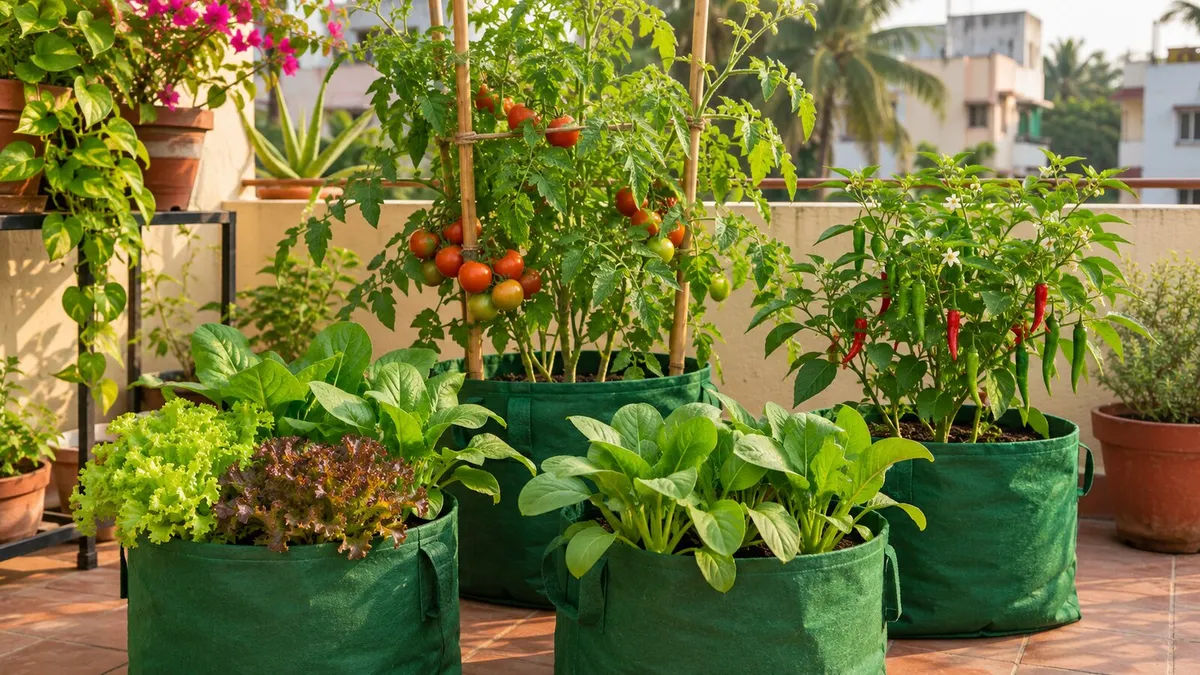
If you’re buying bags for two pepper plants, start with two 5-US-gallon grow bags, one for each plant. Together they hold about 1.34 cubic feet. A single 2-cubic-foot bag of potting mix covers both with some left over. A five-pack of containers looks inexpensive until you price the mix for all five.
Match the bag to the crop
| What you plan to grow | Minimum container volume | What to check on the listing |
|---|---|---|
| Leaf lettuce | ½ US gallon | Look at the opening width if you want a row of plants. |
| Cherry tomato | 2 US gallons | Read the plant label for mature size. A vigorous vining variety needs room and support. |
| Standard tomato | 5 US gallons | Measure the base width and plan where its support will stand. |
| Pepper | 5 US gallons | Count one container per plant when building your shopping list. |
These minimum volumes come from the University of Maryland Extension. A larger container gives roots more space and holds more water. Check whether a seller lists US gallons, liters, or just the diameter. At the same diameter, two bags with different heights can hold quite different amounts. University of Maryland Extension container sizing table
Two checks before checkout
Count the sunny hours. Check the intended spot in the morning, at midday and in the afternoon. Maryland Extension gives a range of 6–8 hours of direct sun for peppers and tomatoes and 3–5 for leafy cool-season crops. If a neighboring building shades your patio after lunch, lettuce may make better use of the space. University of Maryland Extension location guide
Price the filled container. Divide total US gallons by 7.48 to estimate cubic feet of mix. For five 5-gallon bags, that comes to 3.34 cubic feet. Compare the combined price of the bags, mix and any supports. Then measure the route from your faucet to the plants. A hot patio can mean frequent watering.
A fabric bag makes sense when the size and watering routine fit your space. If you’re considering one permanent bed instead, use the raised bed soil calculator before choosing. Our backyard garden guide covers planning a larger layout, and the self-watering planter guide explains how a reservoir works. Browse Home and garden for related guides.
More in Home and garden
- Home and garden
How Much Soil Does a 4 × 8 Raised Bed Need?
Work out how many cubic feet, cubic yards or bags to buy for a 4 × 8 raised bed. Compare three fill depths and account for soil you already have.
- Home and garden
How to Make Compost at Home in India (Even in a Flat): The Simple Bucket Method
Turn kitchen waste into compost in a flat: the wet-to-dry mix, a simple bucket method, fixes for smell and flies, and when it's ready to use.
- Home and garden
New Puppy Checklist for India: What to Buy Before Day One (and What Can Wait)
Bringing a puppy home in India? A short list of what to buy first, what can wait, how to puppy-proof a flat, and what to ask the vet.