How to Make Compost at Home in India (Even in a Flat): The Simple Bucket Method
A small compost bucket can work on a balcony or in a utility area. The routine is simple: add kitchen scraps, cover them with dry material, keep the mix damp and turn it now and then. The tricky part is usually the balance. Too much wet waste can leave a soggy, smelly bucket; too little moisture slows things down. Here is a practical setup, what to leave out and how to tell when the compost is ready.
What can go in, and what can’t
Compost needs two kinds of material. “Greens” are wet and rich in nitrogen, and they rot fast. “Browns” are dry and rich in carbon, and they soak up moisture and let air in. The US Environmental Protection Agency (EPA) gives a useful starting point of roughly two to three parts browns to one part greens. Treat that as a guide, not a precise recipe: scraps vary in how wet they are.
Wet (greens): peels, tea leaves, coffee grounds, eggshells
- Vegetable and fruit peels, and the ends you trim off
- Used tea leaves and coffee grounds
- Crushed eggshells
- Wilted flowers from the pooja room, without plastic or thread
- Fresh green leaves and plant trimmings
Chop big pieces, such as a watermelon rind or a banana stem, into small bits. They break down much faster.
Dry (browns): dry leaves, cocopeat, shredded newspaper or cardboard
- Dry fallen leaves (collect a sack in winter, when trees drop them, and store it for the year)
- Cocopeat
- Shredded newspaper and plain brown cardboard (no glossy or plastic-coated paper)
- Sawdust from untreated wood
- Dried grass
Keep a bag of dry material beside the bucket. Each time you add scraps, cover them so no food is left exposed. The EPA recommends a much deeper layer for an outdoor pile; in a small indoor or balcony bucket, use enough to cover the scraps and absorb excess moisture.
Keep out: plastic, glass, oil, meat, dairy and cooked oily food
- Meat, fish and bones, and dairy such as curd, paneer and ghee. The EPA says these can attract animals, and that home piles generally do not get hot enough to break them down properly.
- Oil and fried or greasy food. Oily leftovers smell and attract pests. The EPA says small amounts of cooked food are fine, but in a flat it is safer to leave cooked food out.
- Plastic, glass, metal and rubber bands. They do not rot.
- Pet waste. It can carry germs, so keep it out of compost for food plants.
- Diseased plants, and weeds that have gone to seed.
The simple bucket method for a flat (step by step)
You need two buckets or tubs with lids (20 to 25 litres is a manageable size), a drill or a hot nail to make holes, a small tray to catch any liquid, and a bag of browns.
- Give it air. Use a compost bucket with ventilation, and place a tray underneath if it can leak. Air helps the material break down; a closed, waterlogged bucket tends to turn unpleasant.
- Start with a dry layer. Put a few inches of browns, such as dry leaves or cocopeat, at the bottom.
- Add waste, then cover it. Tip in the day’s kitchen waste and cover it fully with browns. No food should be visible.
- Keep it damp, not wet. The EPA describes the right moisture as the consistency of a wrung-out sponge. If it is soggy, add browns. If it is dusty and dry, sprinkle a little water.
- Stir once a week. Turn the contents with a small trowel or a stick to let air in.
- Keep the lid on and the rain out. Keep the bucket covered so rainwater cannot collect in it. During the monsoon, move it under cover.
- Start the second bucket when the first is full. Stop adding to bucket one. Keep it damp, stir it now and then, and let it finish while you fill bucket two.
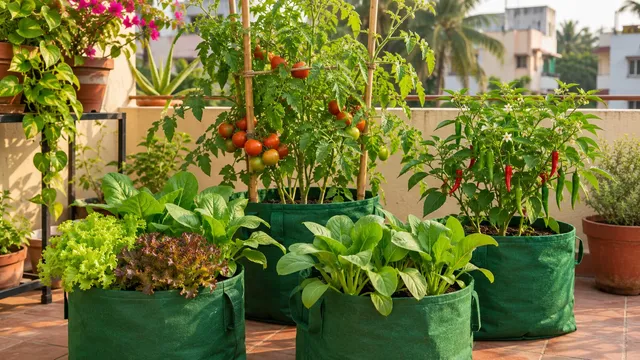
A balcony garden for beginners usually has a shaded corner. Put the bucket there, out of the harshest afternoon sun and away from the door.
Which compost bin should you use?
You can start with any of these. Pick by how much space you have and how much effort you want to put in.
DIY bucket or paint tin
A clean, food-safe plastic bucket or tub with a lid can work for this method. The downside is that you stir by hand and need two buckets.
Stacked 2 or 3 tier bins (khamba-style)
These are tall stacks of pots or tiers, often terracotta, with holes for air. You fill the top tier, then move it down and start a fresh one. They take up very little floor space and look tidy on a balcony, but they cost more than a bucket.
Vermicompost bin (worms)
Worms turn food scraps into vermicompost, but a worm bin needs its own setup. The EPA advises using a suitable composting species and keeping the bedding moist; check a reliable local guide before starting one.
| Bin type | Space | Effort | Smell risk | Cost band |
|---|---|---|---|---|
| DIY bucket or paint tin | Small | Medium (stir by hand) | Low if you add enough browns | Lowest |
| Stacked 2 or 3 tier bin | Small footprint, tall | Low to medium | Low | Mid |
| Vermicompost bin | Small to medium | Higher (look after the worms) | Low when kept right | Mid |
How long does compost take?
There is no dependable calendar date for a home bucket. It depends on the mix, how often you add scraps, the size of the pieces, moisture, airflow and temperature. A warm balcony and chopped scraps can help; a cool winter corner or a bucket that is rarely turned can take longer. Check the material itself rather than planning around a promised number of weeks.
How to tell it’s ready: the compost is dark brown and crumbly, it smells like damp earth, and you can no longer recognise the peels and leaves you put in. A few hard bits, such as eggshell or a stem, are fine. Sieve them out and put them back in the next batch.
Compost problems and fixes
| Problem | Likely cause | Fix |
|---|---|---|
| Smells bad or of ammonia | Too wet, too many greens, not enough air | Add browns, stir well, and check the air holes are clear |
| Fruit flies | Food left uncovered | Bury fresh waste under browns every time and keep the lid closed |
| Maggots | Too wet or food left exposed | Add plenty of browns, stir, and cover each addition. Leave out cooked food and dairy |
| Ants | Too dry | Sprinkle water until it feels like a wrung-out sponge, then stir |
| Not breaking down | Pieces too big, too dry or not enough greens | Chop waste smaller, add a little water and some fresh greens, and stir |
| Liquid at the bottom | Too wet | Add browns and make sure the base holes and tray let it drain |
| Rats or other animals | Meat, dairy or gaps in the bin | Keep those foods out. The EPA recommends a secure lid and closing gaps that could let rodents in larger than ¼ inch |
How to use your compost in pots and grow bags
Mix the finished compost into your potting mix instead of filling a pot with compost alone. Compost feeds the plant, but on its own it can stay too wet or pack down. There is no single right ratio, so start with a modest share and adjust to the plant. See what to fill a grow bag with for the other parts of the mix.
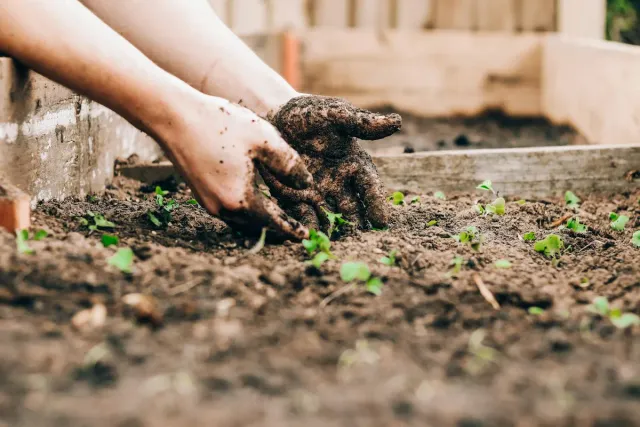
You can also top-dress: spread a thin layer of compost on the surface of an established pot and water it in. This suits leafy greens. For feeding winter vegetables in pots, a light dose every few weeks is usually enough. If you have a ground-level patch, compost and a mulch of dry leaves both help with keeping a first food garden going.
Frequently asked questions
Can I compost in a flat without a smell?
A smell often points to excess moisture or poor airflow. Add dry browns, cover fresh scraps and turn the mix. Keep meat, dairy and greasy foods out.
How long does kitchen waste compost take in India?
There is no fixed timeline. The mix, temperature, moisture, airflow and how often you add fresh scraps all affect how quickly it finishes. Look for dark, crumbly material with an earthy smell rather than relying on a date.
Can I use cocopeat instead of dry leaves?
Yes. Cocopeat works as a dry brown material and holds moisture well. Many people use a mix of cocopeat, dry leaves and shredded newspaper, depending on what they have.
Do I need worms to make compost?
No. The bucket method in this guide works without worms. Worm bins (vermicompost) make fine compost, but they need more care to keep the worms healthy.
Can I put cooked food in home compost?
For a small flat bucket, leave cooked leftovers out. The EPA lists cooked food among materials to avoid in a backyard pile, noting that scraps such as meat and dairy can attract animals and may not fully decompose.
Where to go next
More in Home and garden
- Home and garden
What Size Grow Bag Do Tomatoes, Peppers and Lettuce Need?
Choose a grow bag for a patio vegetable garden using US gallons, sunlight and potting mix volume. Includes a worked shopping list for two peppers.
- Home and garden
How Much Soil Does a 4 × 8 Raised Bed Need?
Work out how many cubic feet, cubic yards or bags to buy for a 4 × 8 raised bed. Compare three fill depths and account for soil you already have.
- Home and garden
New Puppy Checklist for India: What to Buy Before Day One (and What Can Wait)
Bringing a puppy home in India? A short list of what to buy first, what can wait, how to puppy-proof a flat, and what to ask the vet.