Best Self-Watering Pots for an Indian Balcony: Types, Sizes and What to Buy
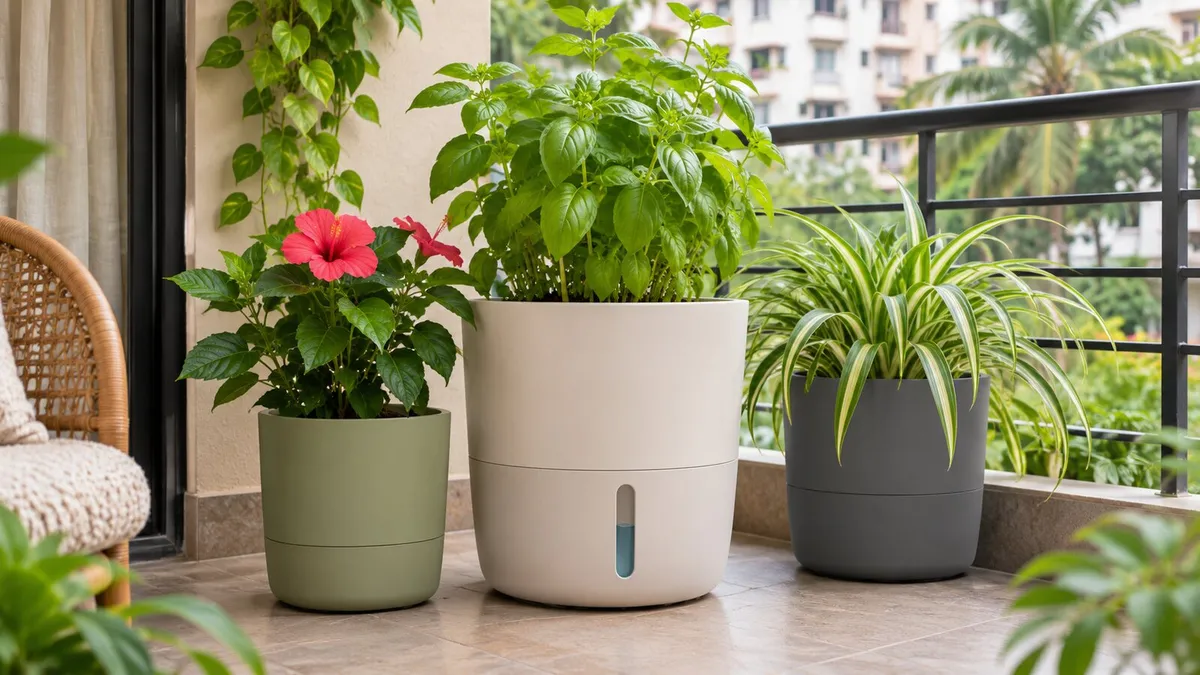
A reservoir pot can buy you time between water checks; it cannot tell you when a plant is thirsty. A small herb in a shaded corner uses water differently from a large plant on a hot, windy balcony. Here is how the common designs work and what to inspect before buying. We have not tested specific pots.
Do self-watering pots work in Indian summers?
They can help keep moisture available between checks, especially for plants that like evenly moist soil. They do not guarantee a fixed number of watering-free days. UMN Extension notes that container plants may need daily watering in hot weather, with frequency depending on conditions (watering guidance). Think of a “days of water” claim as a best-case estimate; check both the reservoir and the mix.
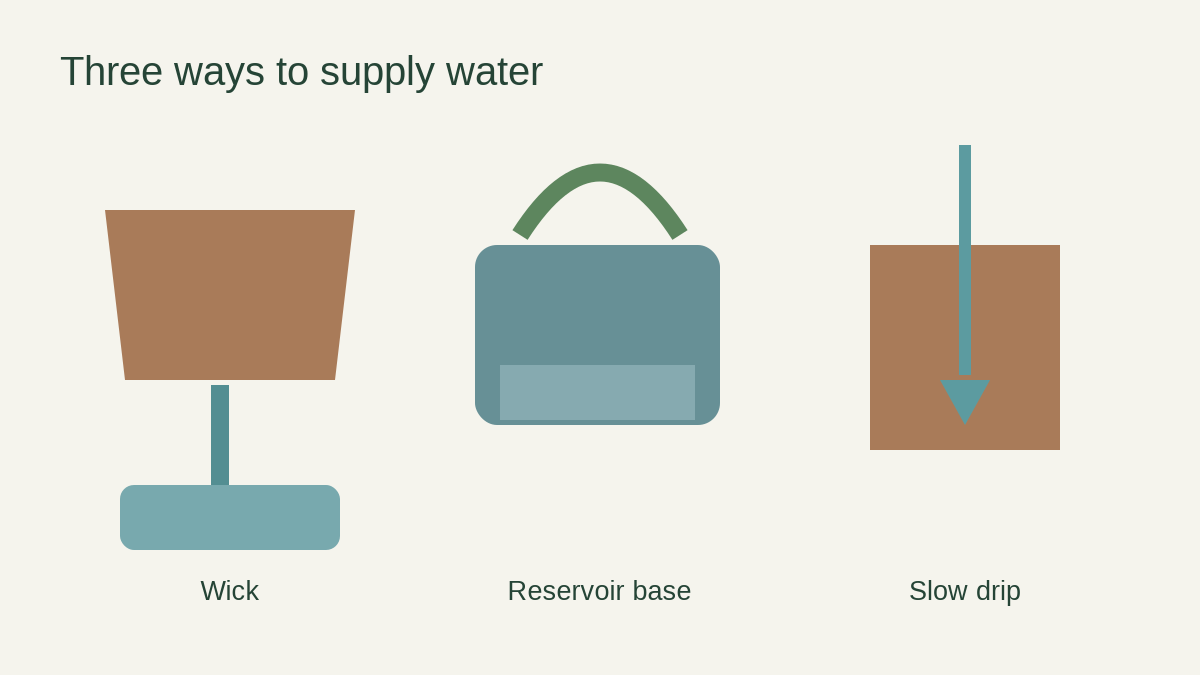
Three self-watering pot types
| Type | How it works | Often suits | Watch out for |
|---|---|---|---|
| Wick or cotton rope | A wick draws water from a lower reservoir into the mix | Herbs and small plants; DIY setups | Confirm wick material, replacement access and reservoir cleaning |
| Reservoir-base planter | A divider or platform separates the water store from the soil | Balcony plants where a stable pot is wanted | Check overflow/drainage design; empty or clean stagnant water as directed |
| Slow drip or bottle insert | A small outlet releases water gradually into the soil | Temporary support for a pot during a short absence | Flow varies with outlet, mix and placement; test before relying on it |
A regular pot is still a good option. The RHS points out that containers dry faster than garden soil and describes stored water as one way to make watering easier (RHS container watering). That is a practical option, not a reason to keep every plant permanently wet.
What size should you choose for herbs and vegetables?
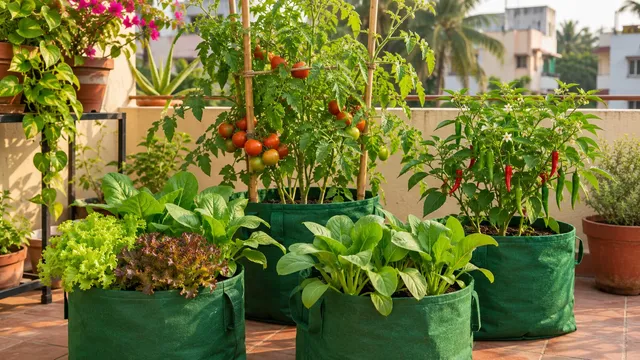
Match the container to the mature plant and its roots. A compact pot may suit a few herbs, while fruiting vegetables need more root space and a sturdy container. Use the seed packet or nursery label for spacing and mature size. Avoid planting several large plants into one small reservoir pot just because the top opening looks wide. If you would rather use a regular container, compare grow bags for a terrace garden by size and material.
For a narrow balcony, measure the ledge or floor footprint first. Check full dimensions, including the widest rim, and confirm that a railing planter’s brackets fit your railing safely. The balcony garden starter guide has a space-planning checklist.
What to check before you buy
- Reservoir access: Is there a fill port or removable tray that is easy to clean?
- Overflow route: Extra water should not remain trapped around roots; understand where excess water goes.
- Wick details: Check whether the wick is included, replaceable and long enough to touch both water and mix.
- Outdoor suitability: Look for stated UV or outdoor use if the balcony gets direct sun.
- Dimensions and volume: Confirm usable soil depth as well as reservoir capacity.
- Stability: Tall or railing-mounted planters need a secure base or fitting.
- Plant fit: A reservoir system is not automatically right for every species or season.
Match the watering design to the plant
A wick pot can suit small herbs if the wick reaches both the reservoir and the potting mix. A reservoir-base planter is easier to inspect when it has an accessible fill point and a clear overflow route. For railing or hanging planters, check the fitting and weight when filled. No specific Amazon listing has been verified for this guide, so compare these features on a live product page before choosing one.
Going away for a weekend or a week
Before leaving, fill the reservoir as directed, water the mix thoroughly, and confirm the outlet works. Test the setup for a few days while you are home. Move plants out of punishing afternoon sun if the species tolerates it, and ask someone to check the pots if you will be away longer than your trial run supports. Do not infer a safe absence period from reservoir capacity alone.
When not to use a self-watering pot
Be cautious during prolonged rainy weather, with plants that prefer a drier cycle, or if the reservoir has no clear overflow path. Constantly wet media can leave too little air around roots. Empty standing water and follow plant-specific care guidance. If the pot smells sour or the mix stays wet, stop filling the reservoir and assess drainage and roots.
In cooler months plants need far less water, so check our winter vegetable pot guide before you fill the reservoir.
Frequently asked questions
Do self-watering pots work for vegetables?
They can suit some vegetables if the pot is large enough and the plant’s moisture needs match the system. Fruiting plants need generous root space; check the variety’s guidance and keep inspecting moisture.
How long can a self-watering pot go without refilling?
There is no universal number. Plant size, reservoir volume, sun, wind and temperature all change use. Test your own pot in the same conditions before depending on it while away.
Do self-watering pots cause root rot in monsoon?
Not automatically, but a saturated mix and poor drainage can stress roots. Reduce reservoir filling in wet weather, confirm overflow and avoid leaving roots in standing water.
Which plants should not go in a self-watering pot?
Plants that need a drier cycle may be a poor match. Check species-specific care advice rather than assuming a reservoir suits every plant.
Are self-watering pots worth it for a small balcony?
They may be useful when you want fewer manual top-ups and can still check the plants. Measure the footprint and make sure runoff will not affect neighbours or the building.
Where to go next
See balcony garden essentials, backyard food gardening for beginners, or the Home and garden category.
More in Home and garden
- Home and garden
What Size Grow Bag Do Tomatoes, Peppers and Lettuce Need?
Choose a grow bag for a patio vegetable garden using US gallons, sunlight and potting mix volume. Includes a worked shopping list for two peppers.
- Home and garden
How Much Soil Does a 4 × 8 Raised Bed Need?
Work out how many cubic feet, cubic yards or bags to buy for a 4 × 8 raised bed. Compare three fill depths and account for soil you already have.
- Home and garden
How to Make Compost at Home in India (Even in a Flat): The Simple Bucket Method
Turn kitchen waste into compost in a flat: the wet-to-dry mix, a simple bucket method, fixes for smell and flies, and when it's ready to use.